



Stay informed
Subscribe to our newsletter, our monthly look at food and non-food quality management.
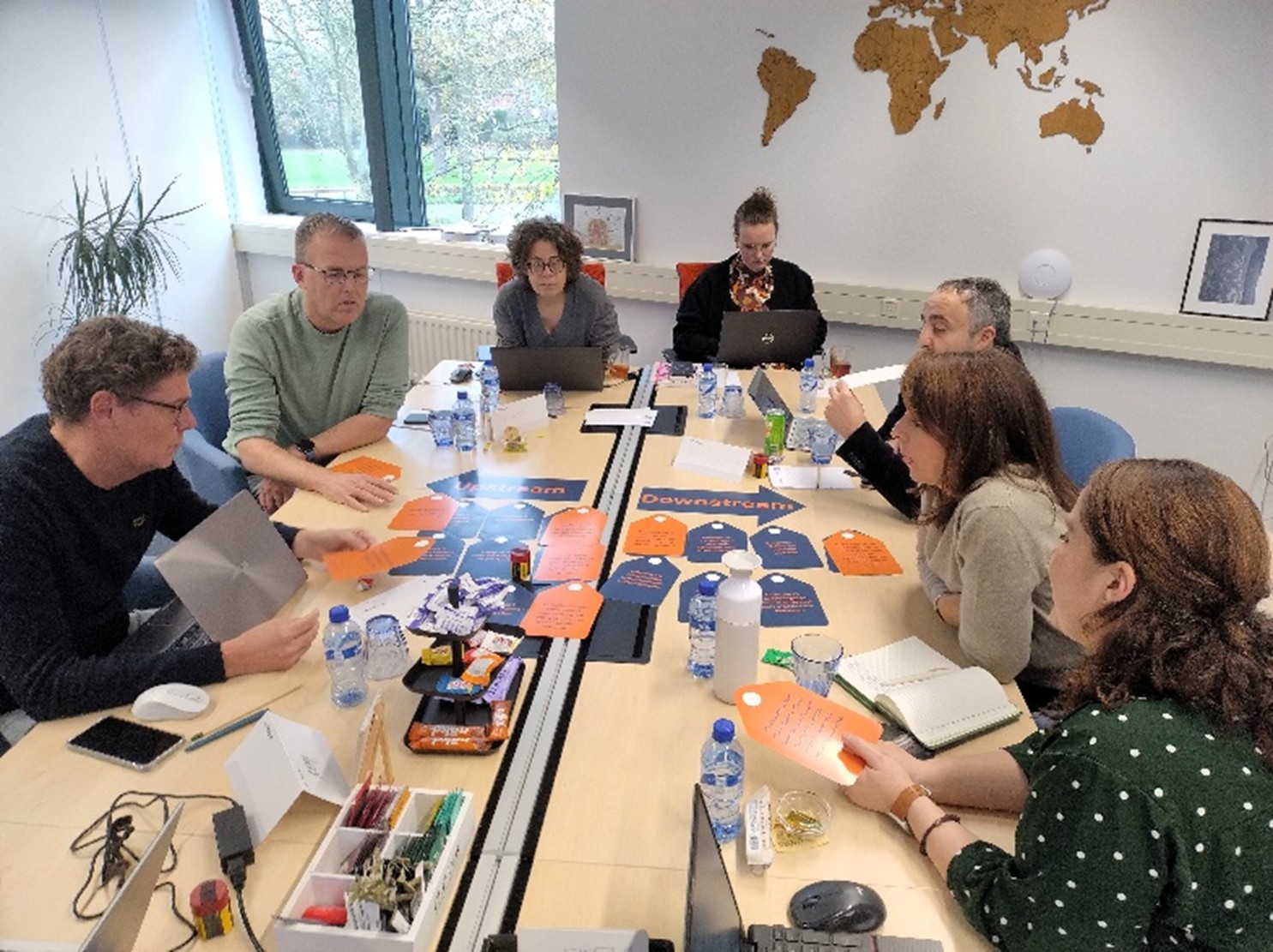
On November 10, 2025, we gave our first Getting Started with CO₂ and SBTi training. Seven participants spent two afternoons working together on a question we hear more and more often in practice: help, I need to do something with CO₂ and SBTi, where do I start?
Retailers such as Albert Heijn and Jumbo make demands, chain partners expect transparency about sustainability and sustainability legislation makes demands. At the same time, many people believe that CO₂ calculations and Science Based Targets (SBTi) are complicated, technical and time-consuming. Fortunately, this does not have to be the case!
The training consisted of two half-day sessions, which can be taken separately or together. All participants chose to attend both sessions. The first half of the day was all about understanding. What is the Greenhousegas protocol? What falls under scope 1, 2 and 3? And especially: how do you calculate this for your organization?
Participants went step-by-step in collecting and processing data and made their first CO₂ calculation. Not to do everything perfectly right away, but to understand how such a calculation is structured. This practical approach was appreciated. As one of the participants put it:
"Very practical and fun assignments."
By working with their own examples, CO₂ became tangible. Scope 1, 2 and 3 became meaningful and participants saw where the biggest impact is. For example, one participant said he was pleased with the "practical examples with tools to get started yourself."
The variety of work formats also played a major role. Explanations, exercises and space for questions alternated, which kept the pace pleasant and allowed everyone to catch on. One participant indicated in the evaluation that he was happy with the "clear explanations and good variety of learning methods".
The second half of the day focused on SBTi. What does it mean to commit? What steps should you take and how do you translate that into achievable goals, including scope 3 and FLAG?
The focus of the training was not only on meeting requirements, but precisely what SBTi can bring to your own company.
They got to work on developing targets and measures for their own company, as well as a fictional case study of a chocolate factory. What reduction targets would suit this factory and what measures could they take to start meeting their targets?
Participants who took the training online were also able to actively participate.
"I attended the training per Teams and was well engaged in the learning and interactive exercises."

At the end of the training, participants knew what data is needed and what would be a logical next step for their organization. They were given a variety of tools to take home. From a tool to calculate their own CO₂ emissions to databases with the right emission factors.
CO₂ and SBTi thus turned out to be less demanding than previously thought, but actually quite fun. Participants walked out the door relieved, feeling that they could now really get started, without the need for an expensive external expert.
Sign up here for the training session on March 2 or September 8: Getting Started with CO₂ and SBTi – Précon
Subscribe to our newsletter, our monthly look at food and non-food quality management.
Is there anything I can help you with?